NotifyGate is Live — and This Is Where the Real Work Starts
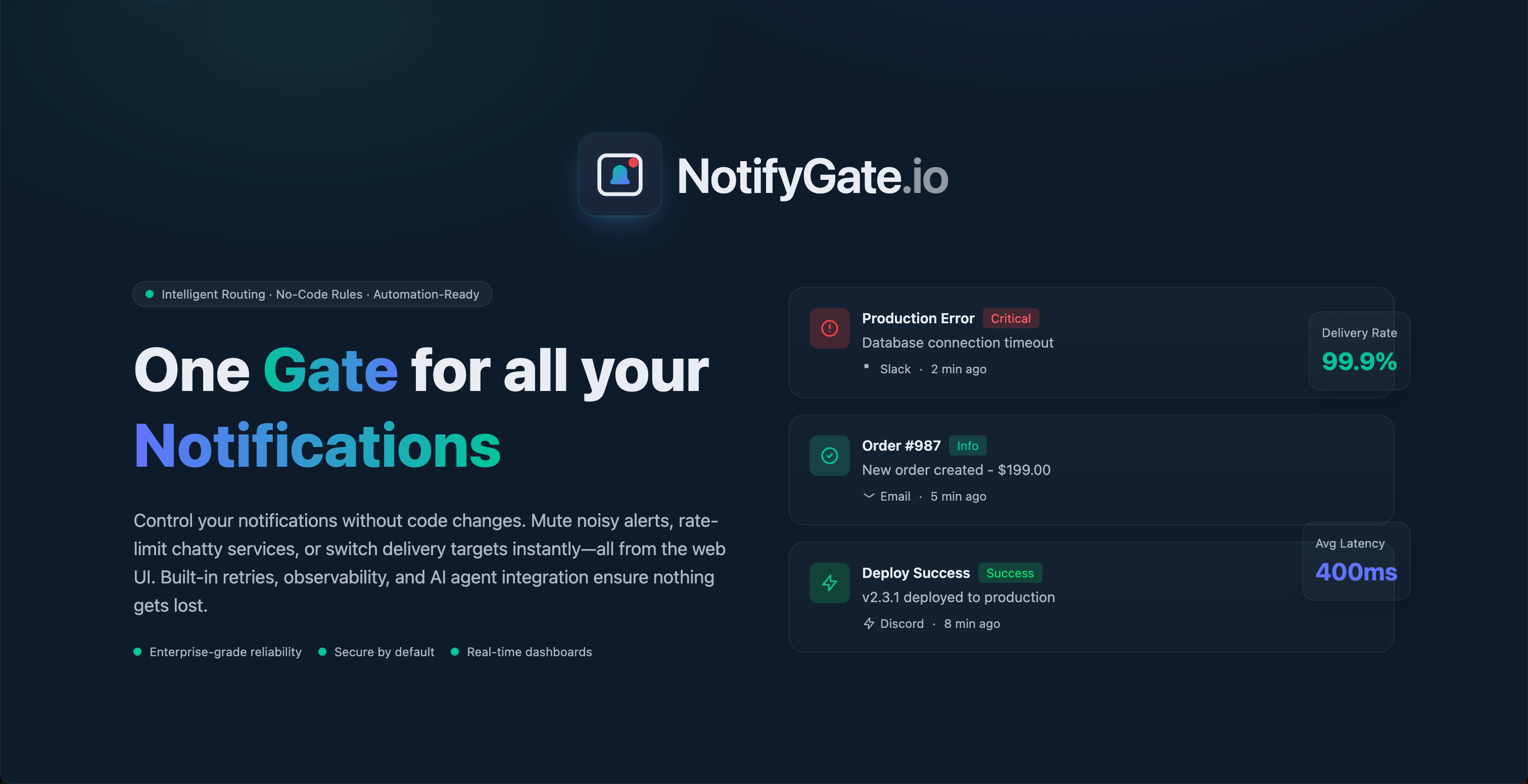
NotifyGate is Live — and This Is Where the Real Work Starts
Today I shipped NotifyGate.
I expected to feel pure relief, but honestly I feel a different kind of pressure now—because building is the part I’m comfortable with. Promotion is my weakest skill, and after launch there’s nowhere to hide: if nobody hears about it, it might as well not exist.
What is NotifyGate?
NotifyGate is an event notification gateway.
You send events to one endpoint, and NotifyGate handles the messy parts of delivery:
- Routing events to the right channels (Slack / Email / Telegram / etc.)
- Retries when providers fail or rate-limit you
- Escalation when something keeps failing
- Visibility into “what happened to this notification?”
My goal is simple: stop rewriting notification plumbing in every project, and make delivery reliable by default.
Why launching is just the beginning
During development, progress is predictable: you build, test, ship.
After launch, progress depends on something harder: finding the first people who actually have the problem.
So my next milestone isn’t “more features.” It’s finding the first 10–50 users who deal with webhook chaos, unreliable delivery, or notification logic scattered across codebases.
Who it’s for (right now)
NotifyGate is probably useful if you:
- Run a SaaS and need consistent notification delivery
- Integrate with multiple channels/providers and want one abstraction
- Care about retries, dead-letter queues, and auditability (because you’ve been burned before)
I could use your help
If you’ve ever built notification systems (or lived through incidents caused by them), I’d love your feedback:
- Where would you look for a tool like this? (communities, keywords, competitors)
- What would stop you from trying it? (trust, security, pricing, setup time)
- What’s the #1 notification pain you have today?
If you’re willing to try NotifyGate, reply with your use case and I’ll help you get set up.
— Red Lin